背景
一直想学习CSI相关内容,恰好自己对LVM比较熟悉,openEBS lvm_localpv 有实现CSI,那么就来看看其具体实现吧https://github.com/openebs/lvm-localpv
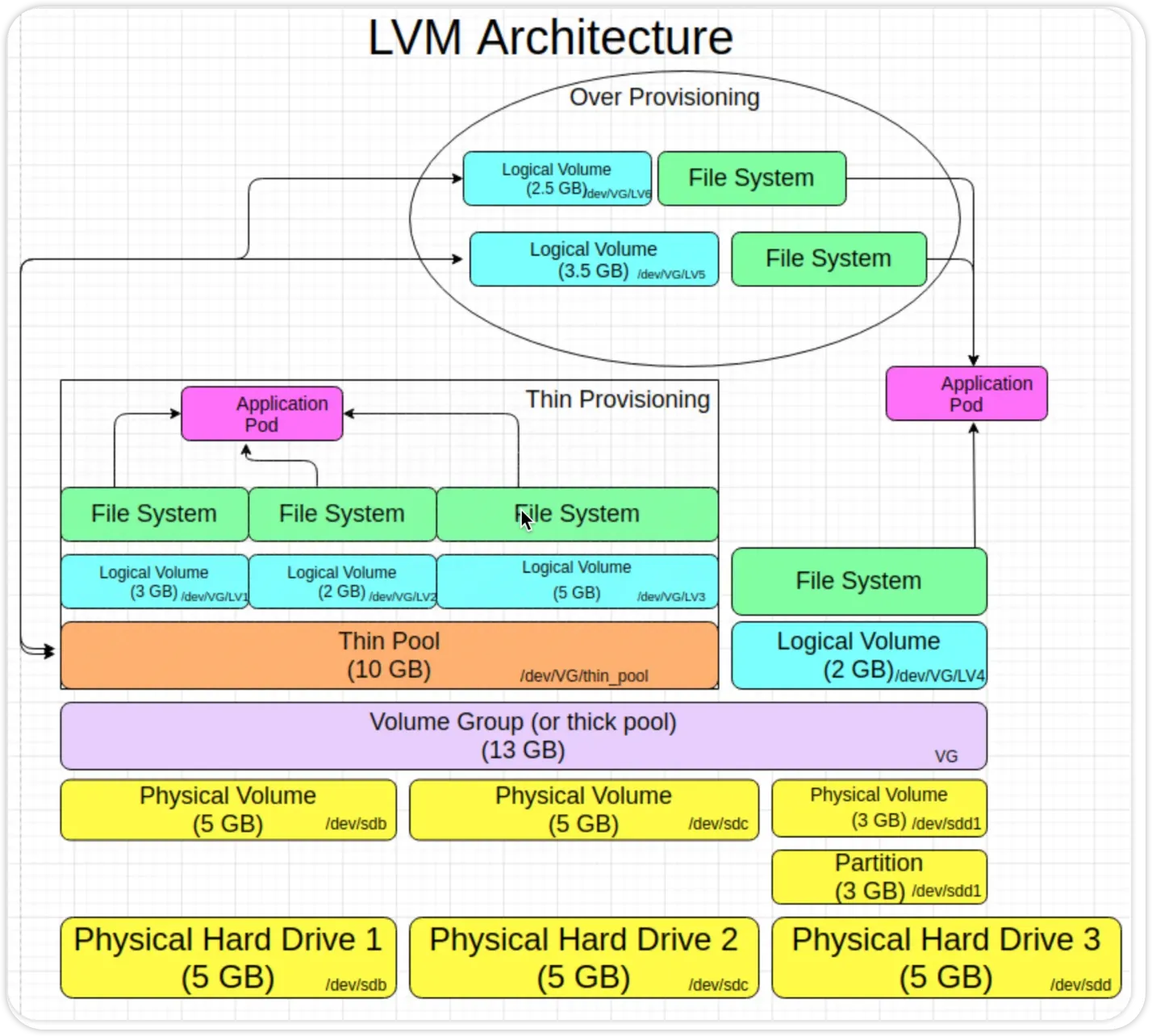
LVM背景
可以参考我之前写的博客
CSI文档
https://github.com/container-storage-interface/spec/blob/master/spec.md
Identity Service
查询插件的元信息和能力,通常在初始化阶段由CO(container Orchestrator容器编排工具)调用
service Identity {
  rpc GetPluginInfo(GetPluginInfoRequest)
    returns (GetPluginInfoResponse) {}

  rpc GetPluginCapabilities(GetPluginCapabilitiesRequest)
    returns (GetPluginCapabilitiesResponse) {}

  rpc Probe (ProbeRequest)
    returns (ProbeResponse) {}
}
Controller Service 中心管控接口
负责处理卷的生命周期,用于控制平面操作,如创建、删除、扩展存储卷,负责对存储资源的协调和调度
service Controller {
  rpc CreateVolume (CreateVolumeRequest)
    returns (CreateVolumeResponse) {}

  rpc DeleteVolume (DeleteVolumeRequest)
    returns (DeleteVolumeResponse) {}

  rpc ControllerPublishVolume (ControllerPublishVolumeRequest)
    returns (ControllerPublishVolumeResponse) {}

  rpc ControllerUnpublishVolume (ControllerUnpublishVolumeRequest)
    returns (ControllerUnpublishVolumeResponse) {}
	// 验证controller信息,AccessMode、VolumeType等
  rpc ValidateVolumeCapabilities (ValidateVolumeCapabilitiesRequest)
    returns (ValidateVolumeCapabilitiesResponse) {}

  rpc ListVolumes (ListVolumesRequest)
    returns (ListVolumesResponse) {}

  rpc GetCapacity (GetCapacityRequest)
    returns (GetCapacityResponse) {}

  rpc ControllerGetCapabilities (ControllerGetCapabilitiesRequest)
    returns (ControllerGetCapabilitiesResponse) {}

  rpc CreateSnapshot (CreateSnapshotRequest)
    returns (CreateSnapshotResponse) {}

  rpc DeleteSnapshot (DeleteSnapshotRequest)
    returns (DeleteSnapshotResponse) {}

  rpc ListSnapshots (ListSnapshotsRequest)
    returns (ListSnapshotsResponse) {}

  rpc ControllerExpandVolume (ControllerExpandVolumeRequest)
    returns (ControllerExpandVolumeResponse) {}
}
Node Service 节点管控接口
负责管理实际的存储节点,处理对于节点上存储的访问、挂载、卸载等操作,将存储设备挂载到k8s节点上的容器中
service Node {

//在节点上初始化存储卷(格式化),并执行挂载到Global目录

  rpc NodeStageVolume (NodeStageVolumeRequest)
    returns (NodeStageVolumeResponse) {}

  rpc NodeUnstageVolume (NodeUnstageVolumeRequest)
    returns (NodeUnstageVolumeResponse) {}

//在节点上讲存储卷的 Global目录挂载到Pod挂载目录

  rpc NodePublishVolume (NodePublishVolumeRequest)
    returns (NodePublishVolumeResponse) {}

  rpc NodeUnpublishVolume (NodeUnpublishVolumeRequest)
    returns (NodeUnpublishVolumeResponse) {}

  rpc NodeGetVolumeStats (NodeGetVolumeStatsRequest)
    returns (NodeGetVolumeStatsResponse) {}

  rpc NodeExpandVolume(NodeExpandVolumeRequest)
    returns (NodeExpandVolumeResponse) {}

  rpc NodeGetCapabilities (NodeGetCapabilitiesRequest)
    returns (NodeGetCapabilitiesResponse) {}

  rpc NodeGetInfo (NodeGetInfoRequest)
    returns (NodeGetInfoResponse) {}
}
核心目录结构
非完整目录结构,只有**/pkg**下保留关键部分
.
├── apis #volume、node、snapshot的CRD
├── builder
│   ├── nodebuilder
│   │   ├── kubernetes.go #CR对象在k8s中的构建代码
│   │   └── node.go #使用builder pattern 实现CR对象的初始化
│   ...
├── collector #CR metrics 收集
├── driver # CSIDriver的实现
│   ├── agent.go #实现node service的接口
│   ├── controller.go #实现controller service接口
│   ├── driver.go
│   ├── grpc.go #对外提供rpc服务
│   ├── identity.go #实现Identity service
├── generated  # CRD对应的lister、clientset、informer
├── lvm
│   ├── iolimiter.go #实现磁盘io限制
│   ├── lvm_util.go #实现lvm管理
│   ├── mount.go #实现绑定、捆绑
│   └── volume.go #对接CR的 client,实现volume的CRUD
├── mgmt
│   ├── lvmnode
│   │   ├── builder.go #构造器
│   │   ├── lvmnode.go #控制器模式
│   │   └── start.go #整合builder和lvmnode代码,实现对外暴露
│   ...
创建PV的过程
若想创建PV,那么此时会调用CSI的CreateVolume
func (cs *controller) CreateVolume(
	ctx context.Context,
	req *csi.CreateVolumeRequest,
) (*csi.CreateVolumeResponse, error) {

	//1. 参数校验
	if err := cs.validateVolumeCreateReq(req); err != nil {
		return nil, status.Error(codes.InvalidArgument, err.Error())
	}
	//2. 构建请求参数
	params, err := NewVolumeParams(req.GetParameters())
	if err != nil {
		return nil, status.Errorf(codes.InvalidArgument,
			"failed to parse csi volume params: %v", err)
	}

	volName := strings.ToLower(req.GetName())
	size := getRoundedCapacity(req.GetCapacityRange().GetRequiredBytes())
	contentSource := req.GetVolumeContentSource()

	var vol *lvmapi.LVMVolume
	if contentSource != nil && contentSource.GetSnapshot() != nil {
		return nil, status.Error(codes.Unimplemented, "")
	} else if contentSource != nil && contentSource.GetVolume() != nil {
		return nil, status.Error(codes.Unimplemented, "")
	} else {
		// mark volume for leak protection if pvc gets deleted
		// before the creation of pv.
		var finishCreateVolume func()
		if finishCreateVolume, err = cs.leakProtection.BeginCreateVolume(volName,
			params.PVCNamespace, params.PVCName); err != nil {
			return nil, err
		}
		defer finishCreateVolume()
		//相当于数据入库
		//如etcd库
		//后续的操作,由volume controller完成
		vol, err = CreateLVMVolume(ctx, req, params)
	}

	if err != nil {
		return nil, err
	}
	sendEventOrIgnore(params.PVCName, volName,
		strconv.FormatInt(int64(size), 10),
		analytics.VolumeProvision)

	topology := map[string]string{lvm.LVMTopologyKey: vol.Spec.OwnerNodeID}
	cntx := map[string]string{lvm.VolGroupKey: vol.Spec.VolGroup, lvm.OpenEBSCasTypeKey: lvm.LVMCasTypeName}

	return csipayload.NewCreateVolumeResponseBuilder().
		WithName(volName).
		WithCapacity(size).
		WithTopology(topology).
		WithContext(cntx).
		WithContentSource(contentSource).
		Build(), nil
}CreateVolume调用结束后,集群中LVMVolume CR创建成功,LVMVolume Controller监听到后,调用informer的AddFunc,将其加入WorkQueue中,
func (c *VolController) addVol(obj interface{}) {
	Vol, ok := c.getStructuredObject(obj)
	if !ok {
		runtime.HandleError(fmt.Errorf("Couldn't get Vol object %#v", obj))
		return
	}

	if lvm.NodeID != Vol.Spec.OwnerNodeID {
		return
	}
	c.enqueueVol(Vol)
}而processNextWorkItem 作为消费者,从workQueue中读取 item
func (c *VolController) processNextWorkItem() bool {
	obj, shutdown := c.workqueue.Get()

	if shutdown {
		return false
	}

	func(obj interface{}) error {
		defer c.workqueue.Done(obj)
		var key string
		var ok bool
		if key, ok = obj.(string); !ok {
			c.workqueue.Forget(obj)
			runtime.HandleError(fmt.Errorf("expected string in workqueue but got %#v", obj))
			return nil
		}
		if err := c.syncHandler(key); err != nil {
			c.workqueue.AddRateLimited(key)
			return fmt.Errorf("error syncing '%s': %s, requeuing", key, err.Error())
		}
		klog.Infof("Successfully synced '%s'", key)
		return nil
	}(obj)

	return true
}后续调用链为processNextWorkItem → syncHandler → syncVol → CreateVolume → RunCommandSplit,在此执行lvcreate 指令
func RunCommandSplit(command string, args ...string) ([]byte, []byte, error) {
	var cmdStdout bytes.Buffer
	var cmdStderr bytes.Buffer

	cmd := exec.Command(command, args...)
	cmd.Stdout = &cmdStdout
	cmd.Stderr = &cmdStderr
	err := cmd.Run()

	output := cmdStdout.Bytes()
	error_output := cmdStderr.Bytes()

	if len(error_output) > 0 {
		klog.Warningf("lvm: said into stderr: %s", error_output)
	}

	return output, error_output, err
}
总结流程:
- 用户创建 PV,触发
CSI的CreateVolume请求。 CreateVolume请求会解析参数并调用CreateLVMVolume来创建 LVM 逻辑卷。LVMVolumeCR 被创建并保存到 Kubernetes 中。LVMVolume Controller监听到 CR 的变化,将其加入工作队列。- 工作队列的消费者(
processNextWorkItem)处理任务,调用syncHandler。 syncHandler调用RunCommandSplit执行lvcreate命令,在节点上创建实际的逻辑卷。- 逻辑卷创建完成后,
LVMVolumeCR 更新状态,表示卷已准备好。
Pod引用PVC的过程
kind: PersistentVolumeClaim
apiVersion: v1
metadata:
  name: csi-lvmpv
spec:
  accessModes:
    - ReadWriteOnce        ## Specify ReadWriteOnce(RWO) access modes
  storageClassName: openebs-lvm
  resources:
    requests:
      storage: 4Gi
对于使用PVC动态创建PV的场景,由storageClass对应的provisioner实现PV的创建,k8s调度器会根据节点的资源情况和Pod要求,将pod调度到合适节点,但在这个阶段会确认Pod最终在哪一个Node上运行,但不会立刻执行PVC的挂载
当POd被调度到Node上准备开始运行时,k8s会执行容器的启动流程
- 在容器启动过程中,Kubernetes 会通过 CSI 插件的
NodePublishVolume操作将 PVC 挂载到容器内。这是实际的挂载操作,它会在节点上找到对应的存储卷(PV)并将其挂载到指定的目录(mountPath)
func (ns *node) NodePublishVolume(
	ctx context.Context,
	req *csi.NodePublishVolumeRequest,
) (*csi.NodePublishVolumeResponse, error) {

	var (
		err error
	)

	if err = ns.validateNodePublishReq(req); err != nil {
		return nil, err
	}

	vol, mountInfo, err := GetVolAndMountInfo(req)
	if err != nil {
		return nil, status.Error(codes.Internal, err.Error())
	}

	podLVinfo, err := getPodLVInfo(req)
	if err != nil {
		klog.Warningf("PodLVInfo could not be obtained for volume_id: %s, err = %v", req.VolumeId, err)
	}
	switch req.GetVolumeCapability().GetAccessType().(type) {
	case *csi.VolumeCapability_Block:
		// attempt block mount operation on the requested path
		err = lvm.MountBlock(vol, mountInfo, podLVinfo)
	case *csi.VolumeCapability_Mount:
		// attempt filesystem mount operation on the requested path
		err = lvm.MountFilesystem(vol, mountInfo, podLVinfo)
	}

	if err != nil {
		return nil, err
	}

	return &csi.NodePublishVolumeResponse{}, nil
}
func MountFilesystem(vol *apis.LVMVolume, mount *MountInfo, podinfo *PodLVInfo) error {
if err := os.MkdirAll(mount.MountPath, 0755); err != nil {
return status.Errorf(codes.Internal, "Could not create dir {%q}, err: %v", mount.MountPath, err)
}
return MountVolume(vol, mount, podinfo)
}func MountVolume(vol *apis.LVMVolume, mount *MountInfo, podLVInfo *PodLVInfo) error {
volume := vol.Spec.VolGroup + "/" + vol.Name
mounted, err := verifyMountRequest(vol, mount.MountPath)
if err != nil {
return err
}
if mounted {
klog.Infof("lvm : already mounted %s => %s", volume, mount.MountPath)
return nil
}
devicePath := DevPath + volume
err = FormatAndMountVol(devicePath, mount)
if err != nil {
return status.Errorf(
codes.Internal,
"failed to format and mount the volume error: %s",
err.Error(),
)
}
klog.Infof("lvm: volume %v mounted %v fs %v", volume, mount.MountPath, mount.FSType)
if ioLimitsEnabled && podLVInfo != nil {
if err := setIOLimits(vol, podLVInfo, devicePath); err != nil {
klog.Warningf("lvm: error setting io limits: podUid %s, device %s, err=%v", podLVInfo.UID, devicePath, err)
} else {
klog.Infof("lvm: io limits set for podUid %v, device %s", podLVInfo.UID, devicePath)
}
}
return nil
}总结流程:
- PVC 创建:由 Provisioner 动态创建 PV。
- Pod 调度:调度器根据资源情况将 Pod 调度到合适的节点。
NodePublishVolume挂载:在 Pod 容器启动时,执行实际的卷挂载操作。- 挂载类型:根据请求类型,执行 块设备挂载 或 文件系统挂载,并处理相关的 IO 限制
监控指标
对于磁盘IO,openEBS lvm_localPV会关注这些指标
Capacity-based Metrics
- 节点上的总预配容量:节点上所有卷组(Volume Groups,VG)的总容量。使用命令
vgs -o vg_size <vg_name>可以获取特定卷组(VG)的总容量(vg_size)。如果不指定<vg_name>,则会列出所有卷组的总容量。 - 节点上的总空闲容量:节点上所有卷组(VG)的总空闲容量。使用命令
vgs -o vg_free <vg_name>可以获取特定卷组(VG)的空闲容量(vg_free)。如果不指定<vg_name>,则会列出所有卷组的空闲容量。 - 节点上的总已用容量:节点上所有卷组(VG)的总已用容量。通过
vg_size减去vg_free得到已用容量(vg_used)值。 - 节点上的总已分配容量:节点上所有逻辑卷(LV)的总容量。使用命令
lvs -o lv_size <lv_full_name>可以获取特定逻辑卷(LV)的容量(lv_size)。如果不指定<lv_full_name>,则会列出所有逻辑卷的容量。 - 节点上所有 PVC 的总已用容量:节点上所有逻辑卷(LV)对应 PVC 的总已用容量。使用命令
lvs -o lv_size,data_percent,snap_percent,metadata_percent <lv_full_name>可以获取特定逻辑卷(LV)的已用容量(lv_used)。如果不指定<lv_full_name>,则会列出所有逻辑卷的已用容量。
usage-based Metrics
- IOPs
- 读取 IOPs:每秒从逻辑卷(LV)完成的读取请求数量。
- 写入 IOPs:每秒向逻辑卷(LV)完成的写入请求数量。
- Throughput
- 读取吞吐量:每秒从逻辑卷(LV)读取的字节数。
- 写入吞吐量:每秒向逻辑卷(LV)写入的字节数。
- Latency
- 读取延迟:每个读取请求从发起到响应的平均时间(单位:毫秒)。
- 写入延迟:每个写入请求从发起到响应的平均时间(单位:毫秒)。
- 等待中的 I/O:排队等待处理的读取和写入请求的数量,尚未被服务。
- 状态:逻辑卷(LV)的状态,指示其是“活动”还是“不可用”。